

Jobs and Skills Australia’s Occupation Shortage List (OSL) provides a point-in-time assessment of the shortage status of occupations in the Australian labour market. According to their Occupation Shortage Report- December 2024, both fill rates and total applicant numbers have increased, indicating that employers are finding it somewhat easier to fill vacancies amid a cooling labour market.
However, the report also highlights a growing suitability gap—measured by the percentage of applicants deemed suitable—which suggests that, despite more applications, finding the right candidate remains difficult. Fill rates and applicant numbers are generally higher in metropolitan areas than in regional ones, implying that skills shortages are persisting longer outside the major cities.
Insights from the OSL, March 2025:
From the OSL data, we look specifically at Health and Medical occupations. We cannot tell from the data how severe a shortage is, only whether a shortage exists or not. From the data table below, we note the following insights:
- Health and Welfare Manager occupations are not in shortage nationwide. However, NT needs Welfare Centre Managers and other Health Service Managers. QLD needs Primary Health Organisation (PHO) Managers, while regional QLD needs Clinical Nursing Directors.
- There are nationwide shortages of Medical Practitioners in all occupations and specialties. Shortages of Medical Practitioners are more pronounced in VIC, WA, SA, TAS and ACT, while QLD has regional shortages.
- There are nationwide shortages of Nursing and Midwifery professionals, but not Nurse Managers. Similar to Medical Practitioners, Nursing and Midwifery workforce shortages are more pronounced in VIC, WA, SA, TAS, and ACT. Registered Nurses (RNs) are not in shortage in NSW or NT. NT only has a regional shortage of Community Health RNs.
- Some Allied health and Scientific occupations are in nationwide shortage, with shortages across most AU states and territories, including: Audiologists, Clinical Psychologists, Dentists, Educational Psychologists, Drug and Alcohol Counsellor (in VIC, WA and NT), Environmental Health Officers and Hospital Pharmacists (regional shortages), Medical Diagnostic Radiographers, Medical Radiation Therapists, Nuclear Medicine Technologists, Occupational Therapists, Optometrists, Organisational Psychologists, Orthoptists, Orthotists or Prosthetists, Physiotherapists, Podiatrists, Rehabilitation Counsellors, Retail Pharmacists, Social Workers, Sonographers, and Speech Pathologists.
- Some Health Support occupations are in nationwide shortage, with shortages across most AU states and territories. This includes Aboriginal and Torres Strait Islander Health Workers, Aged or Disabled Carers, Ambulance Officers, Dental Hygienists, Dental Prosthetists, Dental Technicians, Dental Therapists, Enrolled Nurses, Nursing Support Workers, Personal Care Assistants, Pharmacy Technicians and Residential Care Officers.
CHECK YOUR OCCUPATION SHORTAGE RATING:
Explore Australian Health and Medical occupations below and find their shortage rating.
Table 1. Health and Medical Occupations – Occupation Shortage List – March 2025
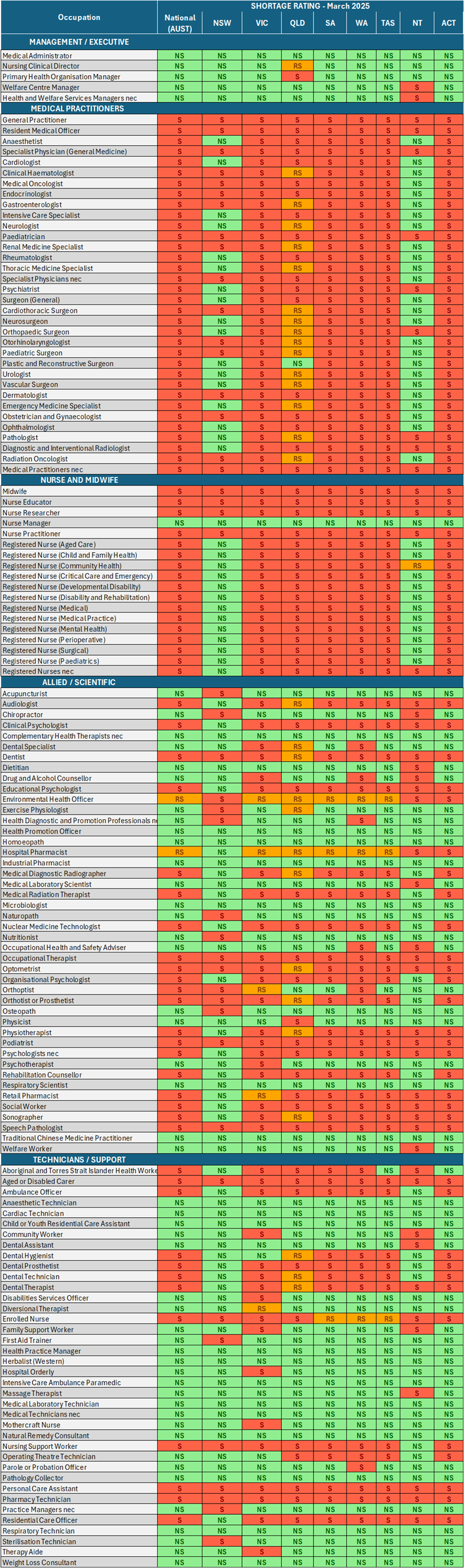
Table 1 source: https://www.jobsandskills.gov.au/data/occupation-shortages-analysis/occupation-shortage-list - data as of March 2025


